
When most families hear the words Medicaid planning, it’s already during a stressful moment—a sudden hospitalization, a dementia diagnosis, or the realization that long-term care is needed right now. At that point, they’re often facing what’s known as crisis Medicaid planning.
But there’s another path—one that reduces stress, protects more assets, and gives families more control: advanced Medicaid planning.
Understanding the difference between these two approaches can make a life-changing financial and emotional impact on you and your loved ones.
What is Crisis (Emergency) Medicaid Planning?
Crisis Medicaid planning, sometimes called emergency Medicaid planning, happens after a person already needs long-term care—such as nursing home care or extensive in-home assistance—and does not currently qualify for Medicaid.
At this stage, families are often dealing with:
- Immediate care needs
- Nursing home bills that can exceed $8,000–$15,000 per month
- Confusion about eligibility rules
- Fear of losing life savings
The goal of crisis Medicaid planning is to qualify someone for Medicaid as quickly as legally possible, while protecting as many assets as the law allows.
Common Crisis Planning Strategies
- Strategic spend-down of assets
- Medicaid-compliant annuities
- Asset protection techniques allowed under state law
- Spousal protections when one spouse needs care
Crisis planning can be effective—but it’s reactive. Options are more limited, timelines are tighter, and mistakes can be costly.
What is Advanced Medicaid Planning?
Advanced Medicaid planning is proactive planning done years before care is needed—often while someone is still healthy or only beginning to think about retirement.
Instead of racing the clock, advanced planning allows families to:
- Preserve more assets
- Avoid Medicaid penalties
- Maintain flexibility in care choices
- Reduce stress for spouses and children
Because Medicaid has a five-year lookback period, planning ahead allows assets to be repositioned legally and strategically before that clock becomes a problem.
Common Advanced Planning Tools
- Irrevocable Medicaid asset protection trusts
- Long-term care planning integrated with estate planning
- Gifting strategies timed to avoid penalties
- Coordination with retirement and tax planning
In short, advanced planning gives families control, while crisis planning focuses on damage control.
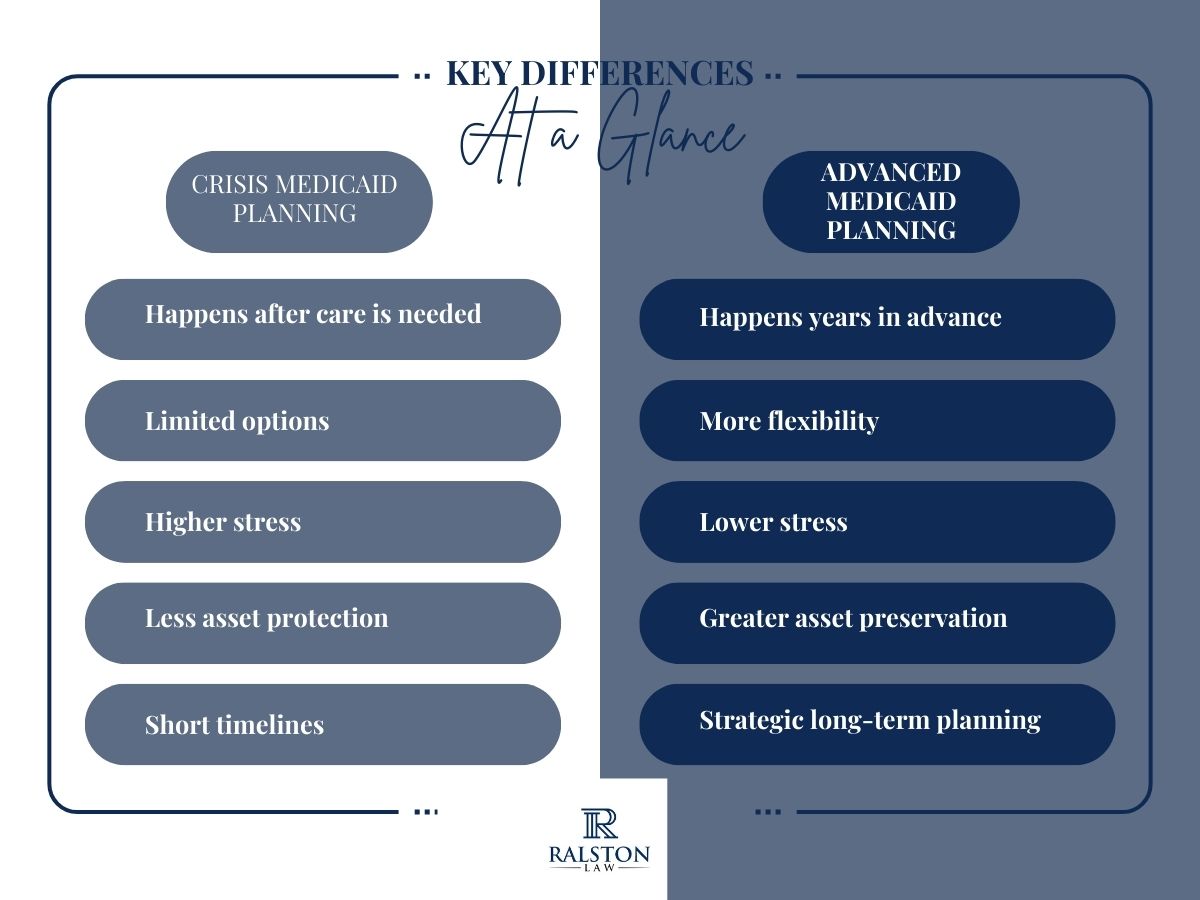
Both approaches are legal and valid—but the results are often dramatically different.
Why Starting Early Saves Money and Reduces Stress
The biggest misconception about Medicaid planning is that it’s only for people who are already broke. In reality, advanced Medicaid planning is designed for middle-class families who want to avoid spending down everything they worked for.
Starting early can:
- Protect a family home
- Preserve savings for a healthy spouse
- Reduce the financial burden on adult children
- Avoid rushed, emotional decisions during a health crisis
Families who plan ahead often spend less out of pocket, qualify more smoothly, and experience far less emotional strain.
New Jersey-Specific Considerations
Medicaid is a federal program—but it’s administered by the states. That means rules, income limits, and strategies can vary.
New Jersey’s Medicaid program is known for strict eligibility rules and aggressive enforcement. Nursing home costs in New Jersey are among the highest in the country, making early planning especially valuable.
Advanced Medicaid planning in New Jersey may involve:
Long-term asset protection trusts
Careful income planning
Coordinating estate planning with Medicaid eligibility
For New Jersey families, waiting until a crisis often means fewer tools and higher out-of-pocket costs.
Which Type of Planning Is Right for You?
If care is already needed, crisis Medicaid planning can still help—and working with an experienced elder law attorney is essential.
But if you’re healthy, recently retired, or helping aging parents plan ahead, advanced Medicaid planning is almost always the smarter choice.
The earlier you start, the more you protect—and the fewer decisions your family will have to make under pressure.
Medicaid planning isn’t just about qualifying for benefits. It’s about protecting dignity, independence, and financial security.
Whether you’re planning for the future or facing an immediate need, understanding your options—and acting early whenever possible—can make all the difference.
Contact us today to get started.
This article is a service of Ralston Law, a Personal Family Lawyer® Firm. We don’t just draft documents; we ensure you make informed and empowered decisions about life and death, for yourself and the people you love. That's why we offer a Family Wealth Planning Session™, during which you will get more financially organized than you’ve ever been before and make all the best choices for the people you love.
The content is sourced from Personal Family Lawyer® for use by Personal Family Lawyer® firms, a source believed to be providing accurate information. This material was created for educational and informational purposes only and is not intended as ERISA, tax, legal, or investment advice. If you are seeking legal advice specific to your needs, such advice services must be obtained on your own, separate from this educational material.